Search This Blog

πŸ“₯ Download: CRLA Administration Materials for All Regions – DepEd’s Nationwide Push for Literacy Assessment

In its ongoing campaign to recover learning losses and improve foundational education, the Department of Education (DepEd) has launched a nationwide rollout of the Comprehensive Rapid Literacy Assessment (CRLA). Teachers, school heads, and education leaders across all regions of the Philippines can now access region-specific CRLA materials, specially designed to measure and support learners’ reading proficiency from Grades 1 to 10.

πŸ“₯ Download: CRLA Administration Materials for All Regions

This initiative is a pivotal part of DepEd’s Learning Recovery and Continuity Plan (LRCP) and represents a large-scale effort to promote standardized yet contextualized literacy assessments across the archipelago.

πŸ“˜ What is the Comprehensive Rapid Literacy Assessment (CRLA)?

The CRLA, or Comprehensive Rapid Literacy Assessment, is a diagnostic tool developed by DepEd to quickly and reliably assess key areas of early literacy such as phonological awareness, vocabulary, fluency, and reading comprehension. Unlike conventional assessments, the CRLA is designed to be responsive to regional diversity, ensuring that learners are tested with materials that reflect their local language, culture, and educational context.

According to the DepEd Bureau of Learning Delivery (BLD), the CRLA serves as a baseline assessment for determining students' readiness to access the rest of the curriculum. It empowers teachers to offer targeted interventions based on data — a vital step toward reducing the reading proficiency gap nationwide.

πŸ“‚ What Can Educators Expect from the CRLA Materials?

The CRLA administration materials now available include everything needed for successful implementation, such as:

  • Teacher’s guidebooks and orientation modules

  • Learner booklets with region-specific reading passages

  • Scoring rubrics, answer keys, and monitoring forms

  • Scripts and flowcharts to ensure consistent administration

Each region's folder reflects the linguistic and cultural characteristics of its learners — a key component of DepEd’s contextualized learning framework. For example, learners in Region V may have reading materials with references to local flora and traditions, while those in Region II may see content aligned with their native dialect and community life.

These materials follow the standards set under the Most Essential Learning Competencies (MELCs) and are aligned with the Philippine Professional Standards for Teachers (PPST), helping ensure that both students and teachers benefit from a holistic, standards-based approach.

🌍 Why a Region-Based CRLA is Essential for Inclusive Education

The Philippine education system is one of the most linguistically diverse in the world. Assessing literacy using generic or centralized tests often misses the mark in capturing true learner abilities, especially in early-grade readers. The use of regionally adapted CRLA tools ensures that learners are assessed using language and content familiar to them, which increases engagement and reduces misinterpretation.

This approach is also supported by the Southeast Asian Ministers of Education Organization (SEAMEO), which notes that localized assessments are far more effective in generating accurate literacy profiles in multilingual nations like the Philippines.

Furthermore, results from the CRLA are used not only for classroom-level remediation but also to inform School Improvement Plans (SIP), Division-wide interventions, and even national education strategies. It’s an example of how assessment data can be used to drive meaningful educational reform from the ground up.

πŸ“Š School Leadership and Assessment Integrity

The successful implementation of CRLA requires the commitment of school leaders and local DepEd officials. According to DepEd Memorandum DM-CI-2024-007, school heads must ensure:

  • Proper orientation of teachers and facilitators

  • Adherence to testing schedules and protocols

  • Secure and timely submission of results

The goal is to maintain integrity, fairness, and consistency across all public schools — from Batanes to Tawi-Tawi — allowing DepEd to use the data for equitable policy decisions.

πŸ“₯ Where to Download CRLA Administration Materials for All Regions

Teachers and school heads can now access and download the CRLA materials for all regions via an official DepEd Google Drive folder. Inside, you’ll find clearly labeled subfolders for every region, with downloadable PDFs and editable files for classroom use.

πŸ‘‰ Click here to access the CRLA materials per region

Make sure to use your DepEd-issued email address to access some files that are restricted for internal use. The materials are updated periodically, so educators are advised to always download the latest version before implementation.

πŸ” Final Thoughts: Building a Nation of Readers, One Region at a Time

The release of CRLA materials across all regions represents a monumental step toward inclusive, culturally aware, and data-driven literacy instruction. More than just a test, the CRLA is a tool for transformation — equipping teachers with knowledge, students with opportunity, and the nation with hope.

Let’s continue to build classrooms where every child learns to read, not by chance, but by design. With the right tools in hand, and the entire country aligned, we move closer to educational equity and literacy for all.

πŸ“Download Official Record of Daily Treatment Forms (2A & 2B) for School Medical & Dental UseπŸ“„πŸ¦·

Keeping an accurate and up-to-date record of daily treatment is essential in every educational institution, especially for monitoring the medical and dental health of students. The Department of Education (DepEd) requires schools to use official forms—SHD Form 2-A for medical records and SHD Form 2-B for dental records—to properly document these treatments.

Instead of merely presenting the same template, this guide explores the importance, official usage, and trusted download access for these vital DepEd documents.


πŸ₯ What is the Record of Daily Treatment - Form 2A (Medical)?

The SHD Form 2-A, officially recognized by the Department of Education, is a structured document that tracks all medical interventions provided to learners. It includes essential information such as:

  • Name, age, sex, and grade/section of the student

  • Stated medical complaint

  • Type of intervention or treatment administered

  • Attending medical staff's name and designation

  • Patient signature and any relevant remarks

According to the DepEd School Health Division, this form is part of a broader health monitoring effort that supports the Child-Friendly School System (CFSS). The objective is to protect learners from health risks that may hinder their academic performance and well-being.


🦷 What is the Record of Daily Treatment - Form 2B (Dental)?

Meanwhile, SHD Form 2-B is the dental counterpart that documents oral health issues encountered by students. This form follows a similar format as the medical version but includes an additional section for tooth number identification, crucial for dental diagnostics and treatment tracking.

Based on DepEd Order No. 39, s. 2022, oral health remains a significant component of school health programs. Thus, schools are mandated to submit reports generated from these forms for data consolidation at the division level.


πŸ“Œ Why These Forms Matter in Schools

Using these DepEd-mandated daily treatment records ensures the following:

  • Standardization of healthcare monitoring across schools

  • Compliance with health reporting policies

  • Ease of record-keeping for future audits or health assessments

  • Prompt referral of serious conditions to higher health authorities

Furthermore, these records become valuable when compiling annual health statistics, managing school health services, or evaluating learner absenteeism trends due to illness.


πŸ“€ Where to Access the Official Forms

You can download Form 2-A and Form 2-B from your school division office’s official website or request them through the designated health personnel at your school. Alternatively, they are available through educational resource platforms that comply with DepEd guidelines.

According to DepEd Memorandum No. 173, s. 2019, schools must use only the latest standardized health forms for recordkeeping to ensure data compatibility across all regions.


πŸ› ️ Format and How to Use the Forms

Both forms are typically printed in A4 size and should be filed daily by the school health personnel—whether a school nurse, physician, or dentist. Forms must be kept confidential and secured, adhering to RA 10173 or the Data Privacy Act of 2012.

For schools that do not have assigned medical staff, partnerships with LGUs or Barangay Health Workers may fulfill the requirement under a Memorandum of Agreement as supported by DepEd’s school-based health programs.

CLICK HERE TO DOWNLOAD RECORD OF DAILY TREATMENT SHD FORM 1 AND 2


🎯Final Word

The Record of Daily Treatment Forms 2-A (Medical) and 2-B (Dental) are more than just paperwork—they are critical instruments in ensuring that learners remain healthy, safe, and ready to learn. By keeping precise health logs, schools take an active role in safeguarding every child’s right to health and education.

πŸ“₯ Download the Latest DepEd School Health Examination Card | A Must-Have Form for All Public Schools

In the continuing effort to safeguard every Filipino learner’s well-being, the Department of Education (DepEd) has institutionalized the use of the School Health Examination Card—a vital document that consolidates essential health and medical data of students across public educational institutions. If you're looking to πŸ“₯ download the DepEd School Health Examination Card, this post offers more than just a link—it offers insight, clarity, and guidance on how this form plays a crucial role in promoting student welfare.

πŸ“₯ Download the Latest DepEd School Health Examination Card


πŸ₯ Understanding the Importance of the DepEd School Health Examination Card

The School Health Examination Card is more than just a sheet of paper—it is a gateway to better learning outcomes through preventive health care and monitoring. According to the Department of Education, this document is essential for tracking physical development, identifying health concerns early on, and aligning educational support with medical needs.

The card typically contains fields for the learner's full name, birthdate, LRN (Learner Reference Number), parent or guardian contact details, and most importantly, the authorization section which discusses data privacy compliance under Republic Act No. 10173, also known as the Data Privacy Act of 2012.

πŸ›‘️ Privacy First: DepEd's Commitment to Data Protection

According to the official DepEd Data Privacy Policy, all health-related information is processed solely for legitimate academic and healthcare purposes. It assures families that this data will only be shared with other government agencies or third-party partners under strict data sharing agreements. The policy states:

"This information shall be stored and held confidentially... and may only be shared with other government agencies or third parties subject to data sharing agreements and data privacy requirements for legitimate purposes only."

This aligns with national and international practices in educational data governance, as endorsed by UNESCO and UNICEF, which both recognize the importance of protecting learners’ data while enabling access to essential services.

🧾 What’s Inside the Form?

Once you download the form, you’ll see clearly demarcated sections like:

  • Personal Details (Name, DOB, Birthplace, Address)

  • Educational Identifiers (School ID, Region, Division, LRN)

  • Emergency Contact Information

  • Consent and Privacy Notice in both English and Filipino

Notably, the bilingual consent form ensures inclusivity and accessibility for Filipino households. This form must be signed by both the child and the parent/guardian to authorize DepEd’s use, collection, and processing of the learner’s health information.

πŸ–¨️ How to Download and Use the Form

Although this form is commonly issued during school enrollment, parents and guardians can also πŸ“₯ download the DepEd School Health Examination Card through their school’s official site or regional division portals. For consistency and accuracy, it's best to get it directly from DepEd’s authorized online platforms or request a digital copy from your local school registrar.

Ensure all entries are filled out honestly and legibly before submission. Schools will use this to coordinate with health partners like local health units, school clinics, or public hospitals, when necessary.

CLICK HERE TO DOWNLOAD SCHOOL HEALTH EXAMINATION FORM


🌐 According to Experts: Why This Form Matters

Dr. Maria Teresa De Guzman, a former regional health consultant of DepEd, highlighted in an interview published by Philippine Daily Inquirer that “early detection of health issues through regular health assessments can significantly improve a student’s academic performance and participation in school activities.”

The World Health Organization (WHO) also supports this approach, stating that school-based health programs are effective mechanisms for early health intervention and promotion.

πŸ“₯ Download Consent Form for Learners’ Health Assessment and Screening πŸ©ΊπŸ“„

Every year, Filipino students bring home a stack of school forms that parents are asked to sign. Among them, one stands out for its importance but is often misunderstood or rushed through — the Consent Form for Learners’ Health Assessment and Screening. But what if this isn’t just another form? What if it’s a key to safeguarding your child’s physical and mental well-being, not only in school but in life?

In this blog post, we reframe the conversation around this DepEd requirement, helping parents and guardians see how deeply it connects to student development, health equity, and the future of public education in the Philippines.


πŸ›‘️ What Is the Consent Form Really For?

The Department of Education (DepEd) mandates the Learners’ Health Assessment and Screening (LHAS) to ensure every student’s basic health needs are identified early. According to DepEd Order No. 39, s. 2022, this initiative supports the implementation of the School-Based Feeding Program (SBFP) and the Mental Health Act (RA 11036).

When you download the consent form for learners’ health assessment and screening, you’re not just giving permission for a medical check — you’re opening the door to:

  • Nutritional assessments that can qualify your child for feeding programs.

  • Early detection of vision or hearing issues.

  • Mental health and psychosocial screenings that could lead to life-changing support.

These screenings, while non-diagnostic, act as crucial early-warning systems, helping school health professionals and guidance counselors intervene before problems escalate.


πŸ” What About Privacy? Your Child’s Data Is Protected

One major concern of parents is data privacy — and rightly so. The consent form clearly outlines the DepEd’s commitment to the Data Privacy Act of 2012, ensuring that your child’s medical data is:

  • Collected lawfully

  • Processed securely

  • Shared only with authorized parties, such as licensed health professionals or partner government agencies

According to the National Privacy Commission, schools must implement “reasonable and appropriate safeguards” for handling sensitive personal data — and DepEd’s protocols reflect that standard.

CLICK HERE TO DOWNLOAD CONSENT FORM FOR LEARNERS’ HEALTH ASSESSMENT AND SCREENING


🧠 The Mental Health Angle: Early Help Is the Best Help

One of the most progressive aspects of this form is the section on Universal Mental Health and Psychosocial Screening. With rising awareness around mental health — especially post-pandemic — this part of the LHAS is timely and essential.

Psychosocial screening is not about labeling children with disorders. Instead, it focuses on identifying learners who may be "at-risk" emotionally or socially, and offering immediate support, counseling, or referral.

As highlighted by the World Health Organization (WHO), early mental health intervention during school years can significantly reduce the risks of long-term emotional and behavioral issues.


πŸ“ Why Giving Consent Matters

Participation is voluntary, and the form makes this clear. You can choose to opt in or out of each component. However, not consenting might result in your child missing out on important programs, such as nutrition support, mental health assistance, or dental checkups.

It’s not just about ticking boxes — it’s about making informed decisions. By signing this consent form, you’re not just complying with school protocol; you're taking an active role in your child’s health and development.


πŸ“Œ Final Thought: It’s a Simple Form, But a Powerful Step

When you download the consent form for learners’ health assessment and screening, you are making a proactive investment in your child’s future. You are saying yes to inclusion, yes to protection, and yes to a school system that looks at students holistically — not just by their grades but by their health, happiness, and humanity.

So next time that form comes home, don’t just sign it — read it, understand it, and own the responsibility it represents.

πŸ“ These are the Links to Download Updated SHD and LHAS (Learners’ Health Assessment and Screening) FormsπŸ©ΊπŸ“‚

In an effort to strengthen learner wellness programs and promote standardized reporting of school-based health activities, the Department of Education (DepEd) has rolled out revised SHD forms and updated LHAS templates. These are not just procedural updates; they are part of a broader vision under the 5-Point Reform Agenda, aimed at bolstering the physical and mental well-being of Filipino learners. This blog offers a fresh and actionable look into how these changes impact schools and how to properly access the essential forms linked below.

πŸ“ These are the Links for Supporting Learners' Health: Updated SHD and LHAS Forms You Need to Know πŸ©ΊπŸ“‚


πŸ“Œ SHD Forms 2025: Still Valid but Slightly Enhanced for Relevance

The updated SHD Forms—short for School Health and Nutrition Division Forms—are largely consistent with the previous versions used by field offices. According to the Department of Education, the updates reflect “minor revisions for suitability to the purpose of this memorandum”, ensuring that they align with the current policy direction while minimizing disruption in usage. These forms continue to serve as critical tools for monitoring student health records, referrals, and service delivery.

πŸ‘‰ You can download the updated SHD forms here: https://bit.ly/SHDForms2025

While Schools Division Offices (SDOs) that have already printed the old forms may continue using them for the meantime, all others are strongly encouraged to shift to the newer versions. This gentle transition ensures flexibility while promoting policy alignment.


πŸ“Š Unified LHAS Templates for Consistent Data Collection Across the Nation 🧠🦷🍱

One of the most crucial components of school health is the Learners’ Health Assessment and Screening (LHAS), which encompasses medical, dental, nutrition, and psychosocial assessments of learners from Kindergarten through Grade 12. According to DepEd’s SHN guidelines, these health services aim to help learners reach their full academic potential through timely and effective interventions.

To that end, DepEd mandates the nationwide adoption of standardized LHAS tools and forms, which are now readily accessible via this link:
πŸ‘‰ https://bit.ly/DepEdLHASSY2526Forms

The School Health and Nutrition (SHN) personnel, who spearhead the Oplan Kalusugan sa DepEd (OK sa DepEd) campaign, will use these tools in collaboration with schools and parents for holistic assessments.

As emphasized by the World Health Organization, school health initiatives play a vital role in creating supportive learning environments and reducing school dropouts due to health issues. The integration of mental and physical health screenings into school systems echoes international best practices.


πŸ“… Key Dates to Remember for LHAS Implementation πŸ—“️

The LHAS schedule for School Year 2025–2026 is both comprehensive and strategic. From baseline nutritional assessments to psychosocial screenings, the calendar is carefully crafted to ensure early detection and intervention.

  • June 9, 2025: Start of Master Listing and LHAS Scheduling

  • June 16, 2025: Start of Nutritional Assessment, Vision, and Hearing Screenings

  • July 7–11, 2025: Health History Intake and Oral Health Screening during OK sa DepEd One Health Week

  • August 11, 2025: Beginning of Mental Health and Psychosocial Screening using Rapid HEEADSSS and CARS tools

  • December 19, 2025: Deadline for Completion of Mental Health Screenings

  • March 27, 2026: Target Completion of Endline Nutritional Assessment for SBFP beneficiaries

This timeline reflects the structured nature of DepEd’s health protocols. It ensures that no learner is left behind in terms of access to critical health services throughout the academic year.


πŸ›‘️ Why Standardization Matters in Learner Health Services

Standardized tools allow for better monitoring, clearer reporting, and more reliable national statistics on student health. As noted by UNESCO, integrating health programs into education fosters long-term development outcomes, especially when data collection is systematic and inclusive.

Moreover, using a single set of forms and screening tools helps reduce administrative confusion and promotes inter-school consistency. These small yet powerful steps help DepEd fulfill its broader goal—ensuring that every Filipino learner thrives both academically and health-wise.


✨ Final Thoughts: A Shared Responsibility in Learner Well-Being

As schools reopen with renewed optimism, let’s remember that health and education are not separate silos. They are interlinked threads in a child’s journey toward success. With the tools now available through the links provided, schools, parents, and DepEd officials have everything they need to champion learner wellness together.

πŸ–‡️ These are the links for empowered education and healthier learners—click, download, and share the tools that shape a brighter future. πŸŒ±πŸ‘¨‍⚕️πŸ‘©‍⚕️

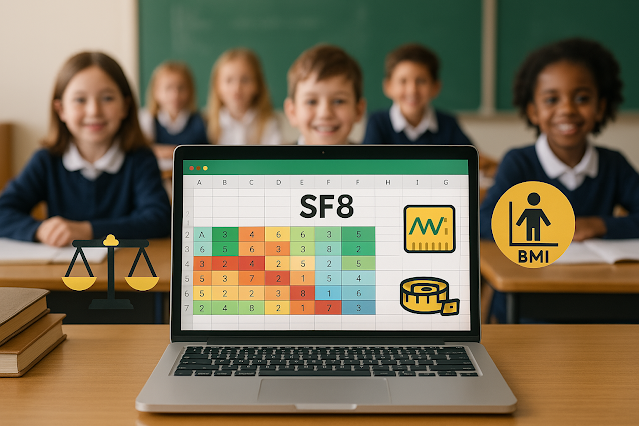
πŸ“₯ Download Automated SF8 With BMI Calculator – A Smarter Way to Monitor Student Health πŸ“Š

Why Modernize SF8?

In today’s digital age, traditional pen-and-paper forms no longer meet the demand for efficient health and nutrition reporting in schools. That’s why an automated SF8 form with a BMI calculator is essential. This new approach not only saves time but also ensures accurate learner health data. The Department of Education's School Form 8 (SF8) is crucial in tracking each student’s nutritional status and height-for-age (HFA) metrics—but imagine doing it in seconds, not hours.

πŸ“˜ What Is SF8 and Why It Matters?

The SF8 or School Form 8 – Learner’s Basic Health and Nutrition Report is a DepEd-mandated document that records every student’s physical wellness, particularly weight, height, BMI (Body Mass Index), and nutritional assessment. It's applicable to all grade levels, from Kindergarten to Senior High School. The traditional process is tedious, but integrating an automated BMI calculator not only makes the process faster but also reduces manual errors.

CLICK HERE TO DOWNLOAD SF8 NOW.

According to DepEd Order No. 13, s. 2017, maintaining accurate health records is vital for effective intervention and feeding programs. With this, teachers and school health coordinators can monitor the nutritional trends among learners and respond with targeted health strategies.

⚙️ How the Automated SF8 With BMI Works

This innovation is designed with built-in formulas to calculate BMI, classify nutritional status (such as Normal, Wasted, Obese, etc.), and auto-fill Height-for-Age assessments. Teachers simply input a learner's weight and height, and the system will instantly display BMI and its corresponding category using World Health Organization (WHO) growth standards.

The tool uses this formula:

BMI = Weight (kg) ÷ [Height (m)]²

Once BMI is determined, it automatically falls into a category:

  • Severely Wasted

  • Wasted

  • Normal

  • Overweight

  • Obese

Meanwhile, HFA classification determines if the learner is Severely Stunted, Stunted, Normal, or Tall, providing another layer of health assessment.

πŸ“ˆ The Benefits of an Automated SF8

Modernizing the SF8 form offers numerous advantages. First, it promotes data accuracy, minimizing human error in complex BMI calculations. Second, it drastically reduces workload for teachers and health officers who often have to compute dozens—if not hundreds—of learners manually.

Additionally, with its automated summary tables, schools can instantly generate reports by sex, nutritional status, and height-for-age, allowing quicker response to malnutrition and growth issues. According to the National Nutrition Council, timely health interventions are key to preventing long-term physical and cognitive issues in children.

πŸ“‚ Why You Should Use This Version of SF8

This enhanced SF8 template is fully editable, Excel-based, and ready for school year roll-out. It’s designed based on the most recent forms distributed by DepEd and aligned with the 2017 SFRT standards. Whether you’re handling elementary, junior high, or senior high school learners, this tool ensures your health records are up-to-date and reliable.

It includes fields such as:

  • School Name, Grade, Section

  • Learner Reference Number (LRN)

  • Complete Name, Birthdate, Age

  • Weight, Height, BMI, BMI Category

  • Nutritional Status and HFA Remarks

It also auto-generates a Summary Table of results, so health coordinators can submit consolidated reports without delay.

✅ Trusted and Data-Aligned

This version follows data privacy protocols and is modeled after recommendations from DepEd Health and Nutrition Center (HNC) and UNICEF Philippines, which emphasize the importance of accessible digital health tools for education professionals.

πŸ“˜ Mapping Literacy Growth: Understanding Reading Profiles in Key Stage 1 vs. Key Stages 2–3 πŸŒ±πŸ“–

Reading is more than just a school subject—it’s a lifelong foundation for learning, communication, and critical thinking. In the Philippines, two major assessment tools help educators gauge where learners are on their literacy journey: the CRLA Profiles for Key Stage 1 (Grades 1–3) and the Phil-IRI Profiles for Key Stages 2–3 (Grades 4–10).

πŸ“˜ Mapping Literacy Growth: Understanding Reading Profiles in Key Stage 1 vs. Key Stages 2–3 πŸŒ±πŸ“–

Each of these tools defines reading profiles that reflect a learner’s ability to decode, understand, and respond to texts. While both aim to improve reading performance, they cater to different stages of cognitive and language development. Let’s examine their profile descriptions and understand how they guide effective reading instruction.


πŸ§’ Key Stage 1 (CRLA): Early Reading Development Begins Here πŸ…°️

In the early grades, students are still forming the building blocks of reading—letter recognition, phonemic awareness, and basic comprehension. The CRLA (Comprehensive Reading Literacy Assessment) captures this phase through four distinct profiles:

πŸ”€ Emerging Profile

Learners in this stage show limited phonological awareness and often know only a few letters. They try to read by sounding out or identifying syllables but fail to recognize whole words. Comprehension is weak or absent. According to the Department of Education, these learners need intensive, targeted instruction to build foundational skills like phonics and decoding.

πŸ›  Developing Profile

Here, learners begin to decode simple words and phrases. They possess basic phonological skills but require constant teacher support to improve automaticity, fluency, and text comprehension. This stage highlights the importance of guided reading strategies, especially in L1 (first language) environments.

πŸ”„ Transitioning Profile

These learners show improved skills but are still mastering accuracy and fluency. They benefit from regular practice to sharpen decoding and comprehension, though they are no longer completely dependent. Instructional scaffolding remains essential at this level.

🌟 Reading at Grade Level

Students at this level have solid letter knowledge, strong phonological awareness, and competent decoding skills. They can read various texts in L1 and L2, and are starting to develop in L3. They show increasing independence in both oral reading fluency and text understanding—a sign of readiness for more complex academic content.


πŸ§‘ Key Stages 2–3 (Phil-IRI): From Struggling to Fluent Readers πŸ“š

Once learners enter Grades 4–10, they are expected to move from learning how to read to using reading as a tool for learning. The Phil-IRI (Philippine Informal Reading Inventory) describes their reading capacity using three practical levels:

🚫 Frustration Level

Learners at this stage are unable to handle grade-level texts independently. They show serious difficulties in decoding, fluency, and comprehension. According to UNESCO, readers in this group are at high risk of academic failure without urgent and targeted interventions.

🧩 Instructional Level

At this level, learners can partially comprehend texts with support. They’re developing, but not yet ready to read independently. This profile mirrors the CRLA's Transitioning stage and demands focused instruction, peer collaboration, and teacher-led guidance. As noted by the World Bank, learners here can still close the literacy gap with consistent, strategic help.

Independent Level

The goal of every literacy program, this level represents readers who can handle texts on their own. They demonstrate strong fluency, comprehension, and can read across subjects. These learners thrive with minimal or no assistance, and their skills support higher-order thinking, analysis, and independent study—hallmarks of academic readiness.


πŸ” Why the Distinction Matters: Matching Instruction to Developmental Needs

By comparing CRLA (Key Stage 1) and Phil-IRI (Key Stages 2–3) profiles, teachers can better tailor reading programs. These descriptions don’t just classify learners—they provide a roadmap for intervention. Here’s why this distinction is critical:

  • CRLA focuses on foundational literacy—ideal for early readers developing core phonics and decoding.

  • Phil-IRI assesses applied literacy skills—vital for older students using reading in content areas like science, history, and math.

Aligning teaching strategies with these profiles helps bridge learning gaps, prevents dropouts, and ensures that no child is left behind in literacy.


🧠 Research-Backed Insights

According to the Department of Education (Philippines), integrating CRLA and Phil-IRI results allows educators to trace student growth and implement data-driven reading interventions. Meanwhile, the World Bank Learning Poverty Report stresses that identifying struggling readers early through such tools is key to addressing functional illiteracy.

By understanding these reading profile descriptions, educators are empowered to foster confident, fluent readers ready for lifelong success.